Some of my favourite photos

Friday, 17 July 2015

2015 Butterfly count

This afternoon around 3.30pm I did the Big butterfly count. The weather was a mixture of sunny and cloudy, around 20 degrees. It was quite windy.
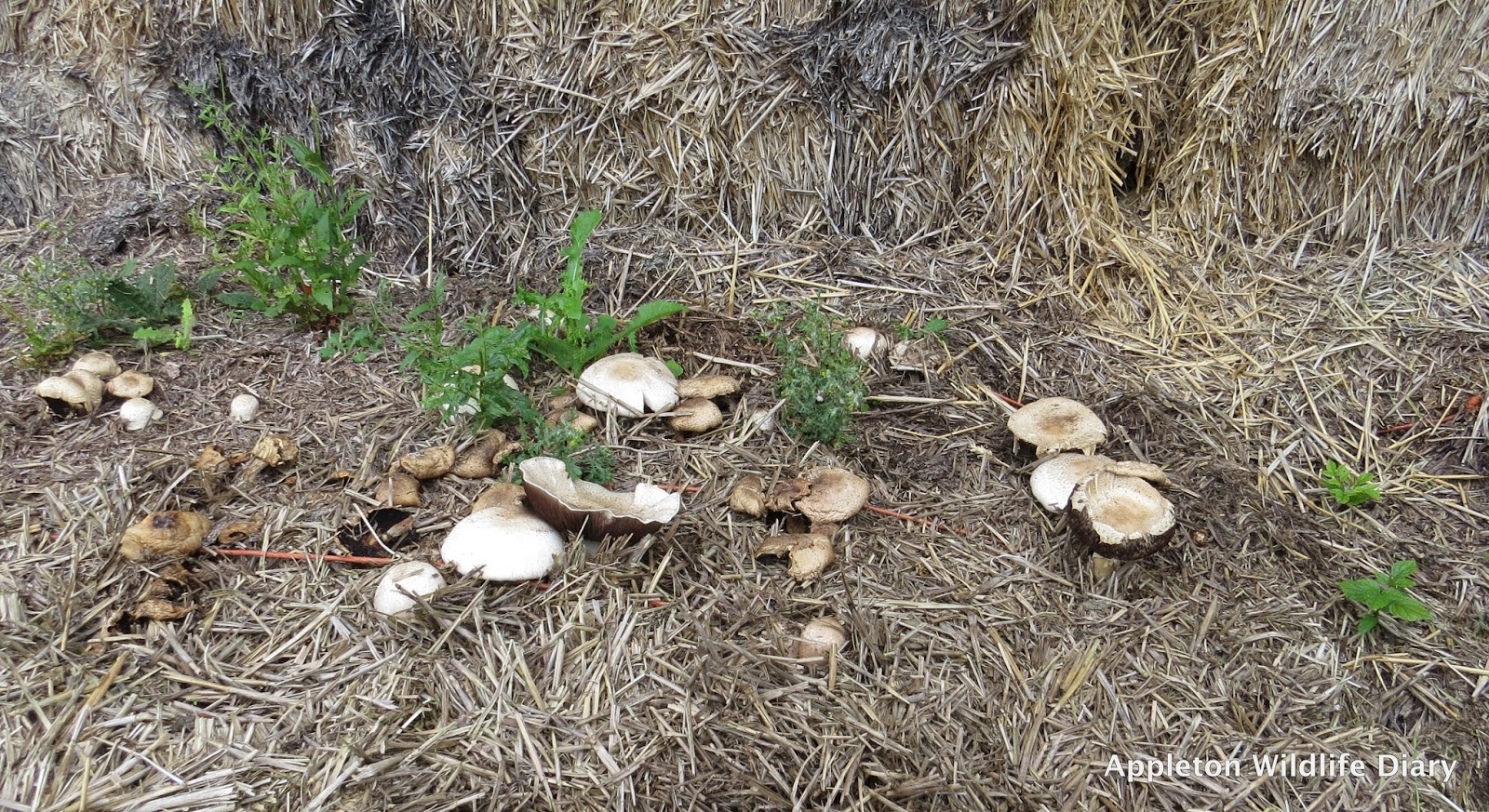
The area I did it in was the edge of wheat field where there is about 20m of wildflowers and grasses as well as some old haybales.
The field has an edge of large trees including ash, oak and hawthorn. 

We saw

12 Small skippers
1 Brimstone
2 Painted ladies
1 Comma
7 Small Tortoiseshell
2 Peacocks
3 Gatekeepers
4 Ringlets
9 Small Whites

The Tortoiseshells were very aggressive towards the Painted Ladies and 2 or 3 of them would chase
one of the Painted ladies around the haybales.
The Small Whites flew around seperately but occasionally came together in 3's or 4's, floating up into the air then going their seperate ways again.

Small Tortoiseshell

Gatekeeper

Comma
Small White


Painted Lady

Small Skipper
Peacock
Painted Lady and Small Tortoiseshell
Ringlet


Ringlet


Small White
Brimstone
This is where I counted

Scarlet Tiger moth


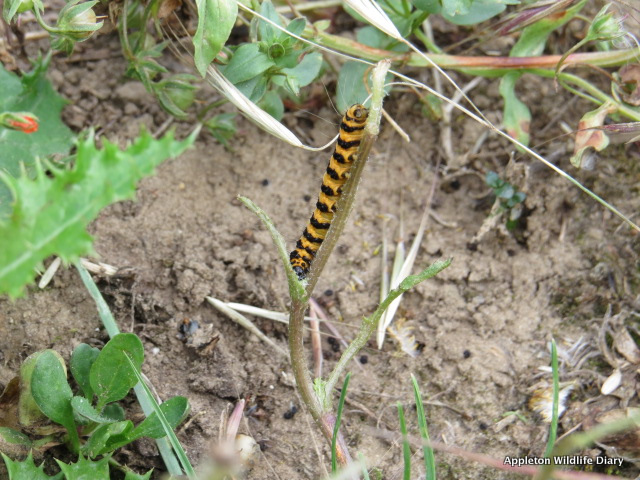
Cinnabar moth caterpillar


Thursday, 16 July 2015

Sometimes what is NOT there is just as important

It is exciting to look at what my trail camera has filmed over night, but sometimes it can be quite disappointing.
When I first looked at last nights footage on the back screen it looked like one of those disappointing nights. 
There just seems to be the same one badger pottering around, rather than the normal ten that live in this sett, interacting together.
Even though there wasn't much, it still gives me a lot of information about what is going on around the sett.
Firstly, the badger didn't come out until 9pm, but I know that they are actually leaving the sett much earlier and spending time out in the fields looking for food. 
The soil around the sett is very dry and hard so it is probably difficult to find food there.
When I first looked through the 21 short films the camera took it shows the badger is around about 9pm, midnight, 4am and 5am. 
It also looks like it is just one badger but infact the badger around 9pm has a bend in her tail. The badger around midnight has a straight, fluffy tail and the badger at 4am is lactating, so it looks like there were 3 different badgers.
When the badgers aren't around other animals come near the sett, such as rabbits, deers, foxes and rats.

I have collected data over two years now and it is good to look back through my blog to start seeing patterns of when the badgers are around.


I think this is a lactating female.


On the way down to put out the camera I took a few photos

Silver-washed Fritillary


Long tailed tits

Friday, 10 July 2015

Swallows feeding sequence

Sat in the garden today I was watching the last of the swallow fledglings. 
I'm hoping that the others are off doing their own thing so don't need feeding anymore, although I did see a Red Kite over the garden with what looked like a swallow in its talons.

I thought I would try something different and get the feeding in slow motion and a sequence of photos of the adult approaching, feeding and flying off.

One thing I noticed is once the adult has handed over the insect, it reverses before flying off.


You can see here that the adult has reversed


Thursday, 9 July 2015

Do Birds get stung by Bees?

A question that popped into my head while I was taking some photos of birds yesterday was

 'Do birds get stung by bees?'

Nearby we have a patch of wild flowers that when the sun comes out it is covered with bees. The birds sit on the trees, hedge and fence posts, dive into the flowers and come out with what looks like a bee in its beak.

What made me think of it was we had to rush one of my dogs to the vets last week because it had been chasing a bee up and down the patio window and had got stung on the tongue.
He started gagging and choking, as well as chewing his tongue.
He very soon was having difficulty breathing.
After the vet gave him anti-inflammatory injection and an antihistamine injection he was ok, although feeling very sorry for himself.

'Do the birds actually swallow the sting?'
'Do they crush the sting or not eat it?'
'Does the sting not affect them?'


Sunday, 5 July 2015

Swallows

Over the last three days I have been watching four fledgling Swallows, they spent a lot of time sitting on the wire that goes over part of my garden.
Swallows normally have 4 to 7 eggs so to raise four they have done well.
Since the Swallows have arrived a couple of months ago there has been a constant chattering noise overhead.  


It has been really interesting to watch them feed their young, the adults seem to feed the young without landing.
You can tell when an adult is coming because the young flap their wings and make high pitch twittering.


The two pictures above and the one below show the adult coming in with food, putting something in a young ones mouth then flying off. 
Unfortunately in the photo below you can see the young one then drops the insect.


Occasionally the adults come and knock the young off when feeding, I don't know whether this is by accident or on purpose to get them to have a go at flying.
If the young do fall off they fly around for about five minutes, then lands again.
Once the fledglings are in the air the adults have a go at feeding them on the wing.


The next three photos are a sequence showing the adult feeding the young without stopping.

Coming in

feeding

flying on

Thursday, 2 July 2015

Easily distracted

I have started a small project of focusing on one animal for a week. 
This week I decided to do the Buzzard H3. I've managed to spend some time with her, watching and noting some of her behaviour as well as taking some photos of her and her mate.

However, I get so easily distracted by other animals and bugs that I find it quite hard to stay on one animal. As I point my camera in one direction something in the corner of my eye will catch my attention, there is always so much to look at.
Whilst walking to where H3 stays we saw this Bee that was bigger than any other Bee so I think it could be a Queen, it was over 2cm long.

Tree bumblebee (Thanks Richard Comont)

There was a Yellowhammer was sat on a tree near where H3 normally perches, when you look closely it has some sort of insect in its beak, maybe a bee.


The pigeons have had a second brood of chicks, this photo was taken 4 days ago and the one below that was taken today, they have started to grow feathers and increase in size.


There are a lot of different butterflies around now. New around this last week are the Gatekeeper, the Meadow Brown and Ringlet.
Comma butterfly

Linnet


My neighbour and I both have different types of insects nests, mine is a wasps nest and my neighbour has a Bee, both in bird boxes.


Rabbit up at the allotment

This spider has a sack of eggs on its back end.